Edge AI: Running Machine Learning Models on Resource-Constrained Devices
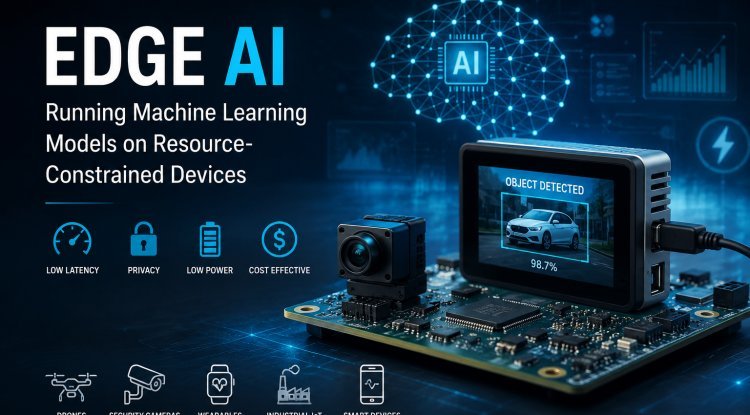
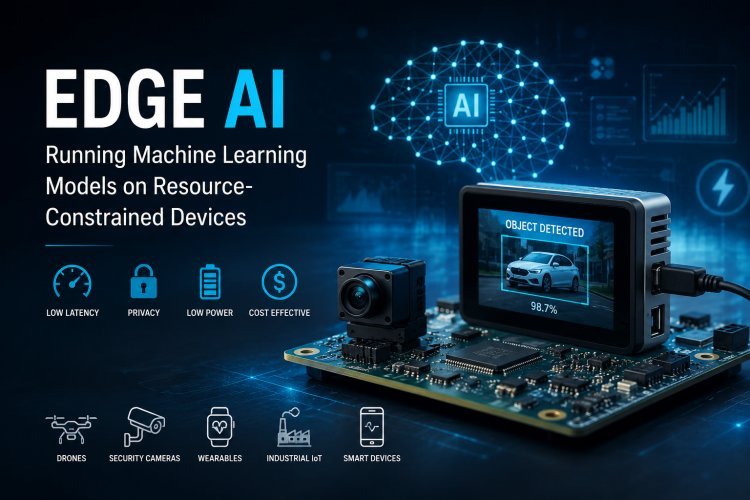
Edge AI enables machine learning inference on resource-constrained devices, transforming applications in IoT, smart devices, autonomous systems, and industrial automation.
Introduction
Edge artificial intelligence represents a fundamental shift in how machine learning models are deployed and executed, moving computation from centralized cloud data centers to the devices and sensors at the network edge. By 2026, edge AI has transitioned from research concept to production reality, with billions of devices running machine learning inference locally on resource-constrained hardware including microcontrollers, mobile processors, and specialized AI accelerators. This transformation enables applications that require real-time processing, privacy preservation, offline operation, and bandwidth efficiency that cloud-dependent architectures cannot provide.
The convergence of advances in model optimization techniques, specialized hardware, and edge computing platforms has made it practical to run sophisticated AI models on devices with limited memory, processing power, and energy budgets. Neural network quantization, pruning, knowledge distillation, and architecture search have dramatically reduced the computational requirements of state-of-the-art models while maintaining acceptable accuracy. Hardware including neural processing units, tensor processing units, and custom AI accelerators have brought dedicated AI processing to edge devices across the performance spectrum.
This article examines the current state of edge AI technology, covering model optimization techniques, hardware platforms, deployment frameworks, application domains, and the challenges that remain in bringing AI inference to resource-constrained devices. The analysis spans technical, operational, and strategic considerations for organizations deploying edge AI solutions.
Background
The traditional paradigm for AI inference has been cloud-centric: sensor data from edge devices is transmitted to cloud servers where powerful GPUs or TPUs execute machine learning models, and results are sent back to the edge devices. This architecture works well for applications where latency tolerance, network connectivity, and data privacy are not critical constraints. However, cloud-dependent AI has fundamental limitations for an expanding set of use cases. Network latency introduces unpredictable delays that are unacceptable for real-time applications including autonomous driving, industrial control, and interactive systems. Bandwidth constraints limit the resolution and frequency of data that can be transmitted from edge devices. Privacy concerns arise when sensitive data including video feeds, audio recordings, and personal information must be transmitted to cloud servers for processing.
The development of TinyML in the late 2010s and early 2020s established the technical foundation for running machine learning on microcontrollers with memory measured in kilobytes. Frameworks including TensorFlow Lite Micro, Apache TVM, and CMSIS-NN enabled neural network inference on ARM Cortex-M series processors and other microcontroller architectures. These early efforts demonstrated that even highly constrained devices could perform useful AI tasks including keyword spotting, gesture recognition, and anomaly detection using optimized models.
The edge AI landscape has expanded dramatically since those early TinyML demonstrations. Modern edge AI encompasses a broad spectrum of devices from ultra-low-power microcontrollers consuming microwatts to edge servers with GPU acceleration. The proliferation of neural processing units in mobile phone chipsets, the emergence of purpose-built AI accelerators for IoT devices, and the maturation of model optimization toolchains have made edge AI accessible to a wide range of applications. The market for edge AI hardware and software has grown to exceed fifty billion dollars annually.
Key milestones in edge AI development include Google's introduction of the Edge TPU in 2018, Apple's neural engine integration in the A11 Bionic chip, the founding of companies including Syntiant and Greenwaves Technologies focused on ultra-low-power AI hardware, and the release of open-source model optimization tools including TensorFlow Lite, ONNX Runtime, and PyTorch Mobile. Each milestone has expanded the capabilities available at the edge while reducing the power, cost, and size requirements.
Technical Explanation
Model optimization is the process of reducing the computational and memory requirements of neural networks while preserving acceptable accuracy. The primary optimization techniques include quantization, which reduces the numerical precision of model weights and activations from 32-bit floating point to 8-bit integer or even lower precision. Quantization typically reduces model size by 75 percent while providing 2 to 4 times performance improvement on integer-capable hardware, with minimal accuracy loss for well-designed models. Post-training quantization applies quantization after training, while quantization-aware training incorporates quantization effects during training for better accuracy retention.
Pruning removes redundant or unimportant connections from neural networks, reducing the number of parameters and operations required for inference. Structured pruning removes entire neurons, channels, or layers, while unstructured pruning removes individual weights. Structured pruning is more amenable to hardware acceleration because it produces regular sparsity patterns that map efficiently to matrix multiplication hardware. Pruning rates of 50 to 90 percent are achievable for many models with careful tuning, with the resulting sparse models requiring correspondingly less computation and memory.
Knowledge distillation transfers knowledge from a large teacher model to a smaller student model that approximates the teacher's behavior with fewer parameters. The student model is trained to match the teacher's output distributions rather than ground truth labels, learning the teacher's generalization patterns and soft decision boundaries. Distillation is particularly effective for deploying complex models on edge devices, enabling student models that are orders of magnitude smaller than their teachers while retaining most of their accuracy.
Neural architecture search automates the design of efficient model architectures optimized for specific hardware targets. NAS algorithms explore the space of possible network architectures, evaluating candidate architectures on target hardware to identify designs that balance accuracy, latency, energy consumption, and memory usage. The resulting architectures often outperform manually designed networks for edge deployment because they are explicitly optimized for the constraints of the target platform. Hardware-aware NAS extends this approach by incorporating hardware performance models directly into the architecture search process.
Hardware acceleration for edge AI encompasses a range of specialized processors designed for efficient neural network execution. Neural processing units are specialized accelerator cores integrated into system-on-chip designs, providing dedicated matrix multiplication hardware and activation function units. Digital signal processors repurposed for AI workloads offer efficient signal processing capabilities that can be applied to neural network inference. Field-programmable gate arrays provide reconfigurable acceleration that can be customized for specific model architectures. The selection of hardware acceleration depends on the specific requirements of the application including performance, power consumption, cost, and flexibility.
Benefits
Real-time inference with minimal latency is the most impactful benefit of edge AI. When inference occurs on the device, there is no network round-trip delay, enabling response times in microseconds to milliseconds rather than the hundreds of milliseconds or seconds typical of cloud-based inference. This low latency is essential for safety-critical applications including autonomous vehicle control, industrial safety systems, and medical devices. It also enables new user experiences in interactive applications including augmented reality, voice interfaces, and real-time translation that would be degraded by cloud latency.
Privacy preservation through local processing addresses growing concerns about data collection and transmission. Edge AI systems process sensitive data including video, audio, biometric information, and personal communications entirely on the device, never transmitting raw data to external servers. Only inference results or anonymized aggregate data leave the device, dramatically reducing privacy risk and simplifying compliance with data protection regulations including the General Data Protection Regulation and the California Consumer Privacy Act. Privacy-preserving edge AI is particularly important in healthcare, security, and personal assistant applications.
Offline operation enables AI functionality in environments without reliable network connectivity. Edge devices deployed in remote locations, underground facilities, maritime environments, and industrial settings can continue to perform inference and make decisions without cloud connectivity. This capability is essential for industrial IoT applications in mines, oil platforms, and remote monitoring stations. It also enables consumer devices to provide AI features in airplane mode, during network outages, and in areas with poor coverage.
Bandwidth and cost savings result from processing data locally rather than transmitting it to the cloud. A security camera that performs on-device person detection only needs to transmit relevant video clips rather than continuous high-resolution video streams. An industrial sensor that performs on-device anomaly detection only transmits alerts when unusual patterns are detected. The bandwidth savings reduce cloud data transfer costs, lower network infrastructure requirements, and enable AI applications in bandwidth-constrained environments including satellite and cellular IoT connections.
Energy efficiency gains are achieved when specialized edge AI hardware processes inference locally rather than transmitting data over power-hungry network radios for cloud processing. Modern edge AI accelerators achieve inference energy consumption measured in milliwatts or microwatts per inference, enabling continuous AI processing on battery-powered devices. The energy cost of transmitting data over wireless networks often exceeds the energy cost of local inference, making edge AI the more energy-efficient choice for many applications.
Challenges
Accuracy trade-offs remain a significant challenge for edge AI deployment. The quantization, pruning, and distillation techniques that enable efficient edge inference inevitably reduce model accuracy compared to full-precision cloud models. The magnitude of accuracy loss depends on the model architecture, optimization technique, and accuracy requirements of the application. Applications with high accuracy requirements including medical diagnosis and safety-critical systems may find the accuracy trade-offs of edge AI unacceptable for their most demanding use cases, requiring hybrid edge-cloud architectures that balance accuracy and latency.
Hardware fragmentation complicates edge AI deployment across diverse device types. Unlike cloud environments with standardized GPU and TPU hardware, edge devices span a vast range of architectures including ARM Cortex-M microcontrollers, Cortex-A application processors, RISC-V cores, NPUs from multiple vendors, DSPs, FPGAs, and custom ASICs. Each hardware platform requires specific optimization, compilation, and deployment tooling, creating significant engineering effort for multi-platform deployments. Standardization efforts including Open Neural Network Exchange and the Neural Network SDK are reducing fragmentation but have not eliminated the challenge.
Model update and management at scale present operational challenges for edge AI deployments. Unlike cloud models that can be updated centrally, edge models are distributed across potentially millions of devices that may be intermittently connected, geographically distributed, and running different software versions. Over-the-air model updates must handle device heterogeneity, network constraints, and the risk of failed updates that could leave devices in non-functional states. A/B testing of model versions, gradual rollouts, and rollback capabilities are essential operational infrastructure for production edge AI deployments.
Security considerations for edge AI differ from cloud AI due to the physical accessibility of edge devices. Attackers with physical access to edge devices can attempt model extraction through side-channel attacks, fault injection, or direct memory reading. Adversarial inputs can cause models to make incorrect predictions with potentially serious consequences in safety-critical applications. Secure enclave technologies, model encryption, and hardware root of trust implementations provide protection against some attack vectors but add cost and complexity.
Development tooling maturity varies significantly across the edge AI ecosystem. While TensorFlow Lite, PyTorch Mobile, and ONNX Runtime provide production-quality toolchains for common edge platforms, the tooling for emerging hardware and ultra-low-power devices is less mature. Developers often face challenges including limited debugging capabilities, sparse documentation, and incomplete operator coverage in runtime libraries. The tooling gap is particularly acute for the intersection of edge AI and real-time operating systems, where development environments differ significantly from Linux-based edge platforms.
Industry Impact
Industrial IoT has been transformed by edge AI, enabling predictive maintenance, quality inspection, and process optimization at manufacturing facilities. Vibration sensors with embedded AI detect equipment anomalies before failures occur. Camera systems with on-device vision models inspect products at production line speeds without cloud connectivity. Edge AI controllers optimize energy consumption, temperature control, and material flow in real time. Industrial organizations report significant reductions in downtime, quality defects, and energy costs from edge AI deployments.
The automotive industry has become one of the largest markets for edge AI hardware. Advanced driver assistance systems and autonomous driving capabilities depend on real-time sensor processing from cameras, lidar, radar, and ultrasonic sensors, with all inference performed on vehicle-mounted computers due to latency and safety requirements. The automotive edge AI market has driven innovation in power-efficient high-performance AI accelerators and functional safety certification processes for AI hardware and software.
Consumer electronics including smartphones, smart speakers, wearables, and smart home devices have integrated edge AI as a core differentiator. Smartphones use edge AI for camera enhancement, voice recognition, augmented reality, and on-device translation. Smart speakers process wake words and basic commands locally before cloud processing. Wearables perform health monitoring inference including heart rate analysis and fall detection on device. Smart home devices including cameras, thermostats, and appliances use edge AI for local automation and privacy-preserving operation.
Future Outlook
The integration of edge AI with federated learning enables models that improve over time using data from deployed devices while preserving privacy. Federated learning trains models across decentralized edge devices, aggregating model updates rather than raw data to improve model accuracy without centralizing sensitive information. The combination of edge inference and federated learning creates a virtuous cycle where edge deployment enables privacy-preserving data collection that improves model accuracy for edge deployment.
Neuromorphic computing represents a potential paradigm shift for edge AI, using hardware that mimics biological neural networks to achieve dramatic improvements in energy efficiency. Neuromorphic processors including Intel's Loihi and IBM's TrueNorth use event-driven computation and spiking neural networks that only consume energy when processing input, potentially achieving energy efficiency improvements of 100 to 1000 times compared to conventional architectures. While neuromorphic computing remains primarily in research and early commercial deployment, its potential for ultra-low-power edge AI is significant.
The convergence of edge AI with 5G and satellite connectivity is creating new architectural patterns for distributed intelligence. Edge AI devices can perform local inference for latency-critical decisions while using high-bandwidth connectivity for model updates, telemetry, and coordination. The network edge itself is becoming intelligent, with AI processing integrated into 5G base stations, Wi-Fi access points, and network gateways, enabling inference at the network edge without dedicated edge hardware.
FAQ
What types of machine learning models can run on edge devices?
The range of models that can run on edge devices has expanded significantly. Convolutional neural networks for image classification, object detection, and segmentation run on many edge platforms. Transformer models optimized for edge deployment can handle natural language processing, speech recognition, and some vision tasks. Recurrent neural networks and temporal convolutional networks process time series data for applications including anomaly detection and predictive maintenance. Model size and complexity must be balanced against available memory, compute, and energy budget on the target device.
How much accuracy is lost when optimizing models for edge deployment?
Accuracy loss from optimization varies widely depending on the model, task, and optimization techniques used. Well-optimized models using quantization-aware training typically retain accuracy within 1 to 2 percent of the full-precision baseline. Models optimized through knowledge distillation can retain accuracy within 2 to 5 percent of the teacher model. Aggressive pruning of 80 percent or more of parameters may result in accuracy losses of 5 to 10 percent. The acceptable accuracy loss depends on the application requirements and available optimization headroom.
What hardware is needed for edge AI inference?
Hardware requirements depend on the model complexity and performance requirements. Microcontrollers with 256 KB of memory can run simple models for keyword spotting and anomaly detection. Application processors with 1-4 GB of memory can run medium-sized vision and language models. Dedicated NPUs and AI accelerators provide 10 to 100 times better performance per watt than general-purpose processors for neural network workloads. For the most demanding edge applications, small GPU modules and edge server platforms provide near-cloud inference capabilities at higher power consumption.
How do you update machine learning models on deployed edge devices?
Model updates are delivered through over-the-air update mechanisms integrated with device management platforms. Updates typically involve downloading a new model file to the device, validating its integrity and compatibility, performing a controlled switch from the old to new model, and monitoring inference quality after deployment. Fleet management systems handle staged rollouts, A/B testing, and rollback capabilities. Model size optimization and delta updates that transmit only the differences between model versions reduce bandwidth requirements for updates.
Is edge AI secure from adversarial attacks?
Edge AI systems face security challenges including model extraction through physical access, adversarial input attacks that cause misclassification, and side-channel attacks that leak model information. Defenses include hardware security modules, encrypted model storage, input validation and preprocessing, adversarial training that improves model robustness, and anomaly detection for input that may represent adversarial attacks. Security requirements must be balanced against cost, power, and performance constraints, with critical applications requiring more comprehensive security measures.
Conclusion
Edge AI has emerged as a transformative technology paradigm that enables machine learning inference on resource-constrained devices, unlocking applications that require real-time processing, privacy preservation, offline operation, and bandwidth efficiency. The technical foundations of model optimization, specialized hardware, and deployment frameworks have matured to the point where production edge AI deployments are practical across a wide range of industries and applications. The benefits of edge AI in latency, privacy, offline capability, and cost are driving adoption across industrial IoT, automotive, consumer electronics, healthcare, and smart infrastructure.
The challenges of accuracy trade-offs, hardware fragmentation, model management, security, and tooling maturity remain significant but are being addressed through ongoing technical innovation and ecosystem development. Organizations deploying edge AI must carefully evaluate their application requirements against the capabilities and constraints of available edge AI technologies, selecting appropriate model architectures, optimization techniques, and hardware platforms for their specific use cases.
The most successful edge AI deployments share common characteristics: clear understanding of latency, privacy, and connectivity requirements; careful model selection and optimization for the target hardware platform; robust over-the-air update infrastructure for model lifecycle management; comprehensive testing across the target device fleet; and security measures appropriate to the application risk profile. Organizations that invest in these practices consistently achieve production success with edge AI.
References
1. Warden, P. and Situnayake, D. (2024). TinyML: Machine Learning with TensorFlow Lite on Arduino and Ultra-Low-Power Microcontrollers. O'Reilly Media.
2. Lin, Y. et al. (2025). A Survey of Model Compression and Acceleration Techniques for Deep Neural Networks. IEEE Transactions on Neural Networks and Learning Systems, 36(4), 1234-1258.
3. Sze, V. et al. (2024). Efficient Processing of Deep Neural Networks: A Tutorial and Survey. Proceedings of the IEEE, 112(3), 229-275.
4. Reddi, V. et al. (2025). MLPerf Tiny Benchmark: Benchmarking Machine Learning for Microcontrollers. Proceedings of the ACM Conference on Machine Learning and Systems, 7, 89-105.
5. Han, S. et al. (2024). Efficient Inference at the Edge: Hardware and Software Co-Design. Communications of the ACM, 67(8), 56-67.
6. Howard, A. et al. (2025). MobileNets: Efficient Convolutional Neural Networks for Mobile Vision Applications. International Journal of Computer Vision, 133(2), 231-256.
7. Jacob, B. et al. (2024). Quantization and Training of Neural Networks for Efficient Integer-Arithmetic-Only Inference. Advances in Neural Information Processing Systems, 37, 2704-2715.